Top menu

  • SITEMAP
  • LEGAL NOTICE
  • USEFUL LINKS

Search

  • ENSREG at a glance
    • The role of ENSREG
    • ENSREG activity reports
    • National regulators
    • Nuclear energy in the EU
  • Nuclear safety
    • Regulating for safety
    • Prevention of accidents
    • Environmental Monitoring
    • Emergency arrangements
    • Nuclear fuel cycle
  • Safe Management of Spent Fuel and Radioactive Waste
    • Management of spent fuel
    • Categorisation of radioactive waste
    • Existing waste management routes
    • Waste management routes under research
  • Nuclear Safety and Waste Regulation
    • EU instruments
    • International conventions
    • International standards and guidance
  • Transparency and public involvement
    • Public information
    • Public participation
  • ENSREG Conferences
    • Venue
    • Conference Programme
    • Presentations
    • Media
  • EU Stress Tests
    • Background and Specifications
    • Country Specific Reports
    • EU level Reports
    • Public engagement

Left lower block

  • News & meetings
  • Documents
  • Regulating for safety
  • Prevention of accidents
  • Environmental Monitoring
  • Emergency arrangements
  • Nuclear fuel cycle

Related Documents

  • Minutes of the ENSREG meeting on 1 February 2011
    08 Mar 2011
  • Minutes of the ENSREG meeting on 7 October 2010
    23 Feb 2011
  • Minutes of the ENSREG meeting on 4 June 2010
    23 Feb 2011
Home > Nuclear safety > Nuclear fuel cycle

Nuclear fuel cycle

   
Share|        
 
Printer-friendly versionSend e-mailPDF version

STAY TUNED!

Keep up to date with the latest news from ENSREG

Syndicate content

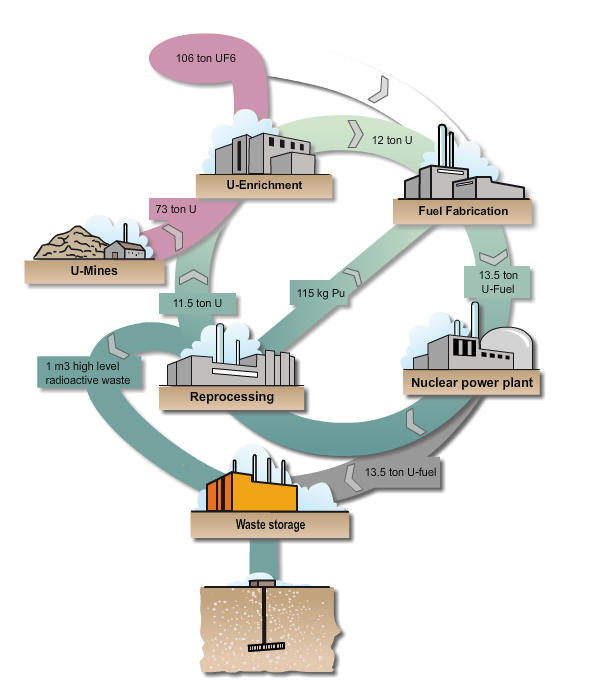
Natural uranium mined from the earth, can be used in certain types of nuclear reactors, but it is normally enriched to produce nuclear fuel. After being used to produce electricity it is known as ‘spent fuel’ and needs storing, possible reprocessing and recycling, before being disposed of safely. If fuel is not reprocessed then the fuel cycle is referred to as an ‘open fuel cycle’. If it is reprocessed and reused then the fuel cycle is considered as a ‘closed fuel cycle’. All stages of the nuclear fuel cycle give rise to some nuclear waste. The scope of ENSREG’s work, and that of the national regulators who are ENSREG members, covers the whole fuel cycle.

Roll over the diagram and click on illustrations to get further information on nuclear fuel cycle.

 

Attachments:
Nuclear fuel cycle description (pdf) - [  625 KB]
Nuclear power plants : how it works (pdf) - [  1 MB]

Top

  • Sitemap | Legal notice | Useful links